Unleashing prosperity and securing energy dominance starts today: the new US president is Sworn in
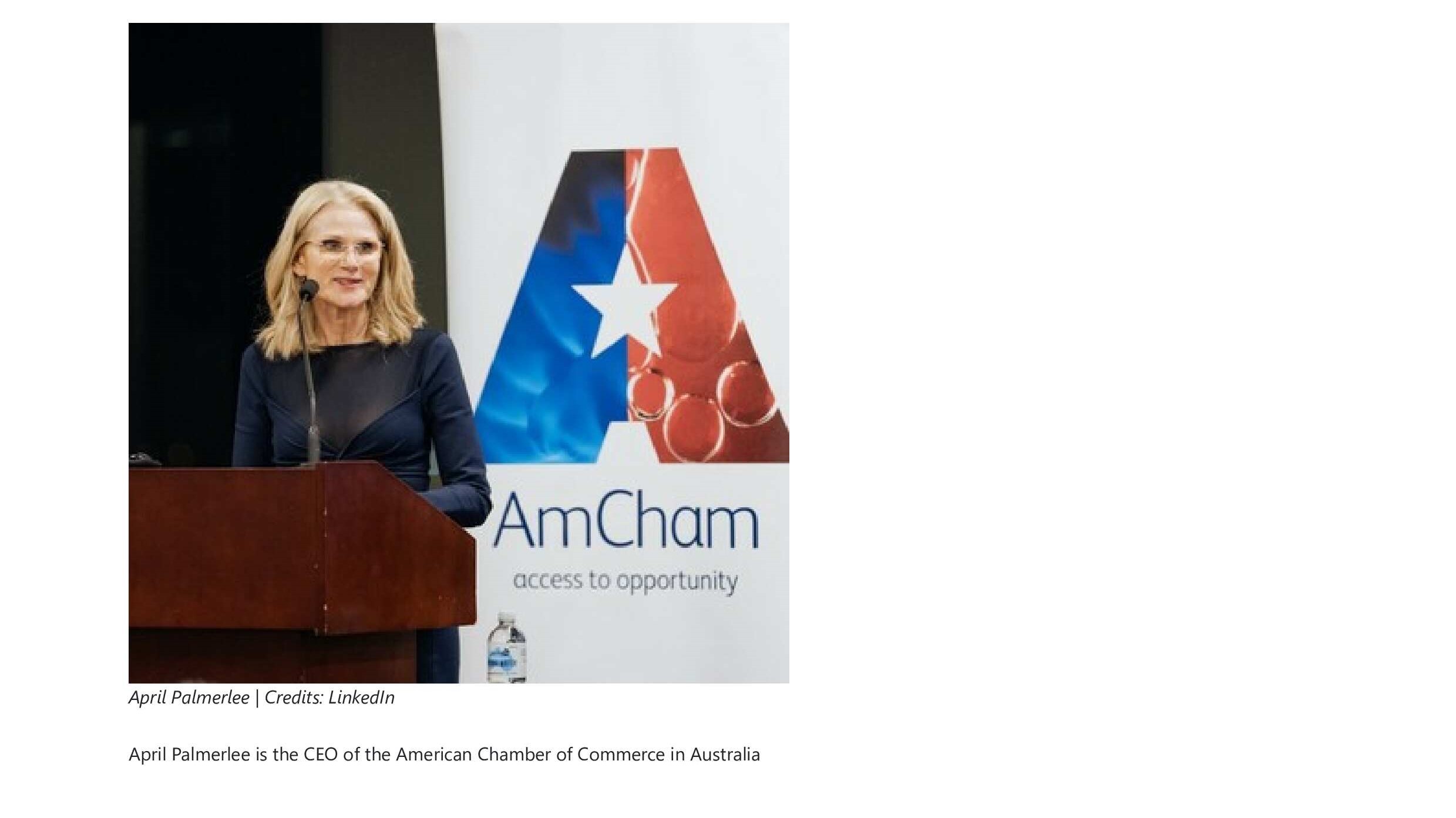
Australia's economic opportunity to expand collaboration with the US energy sector- April Palmerlee
Tuesday, 21 January 2025
Unleashing prosperity and securing energy dominance starts today: the new US president is Sworn in Credit: Energy News bulletin
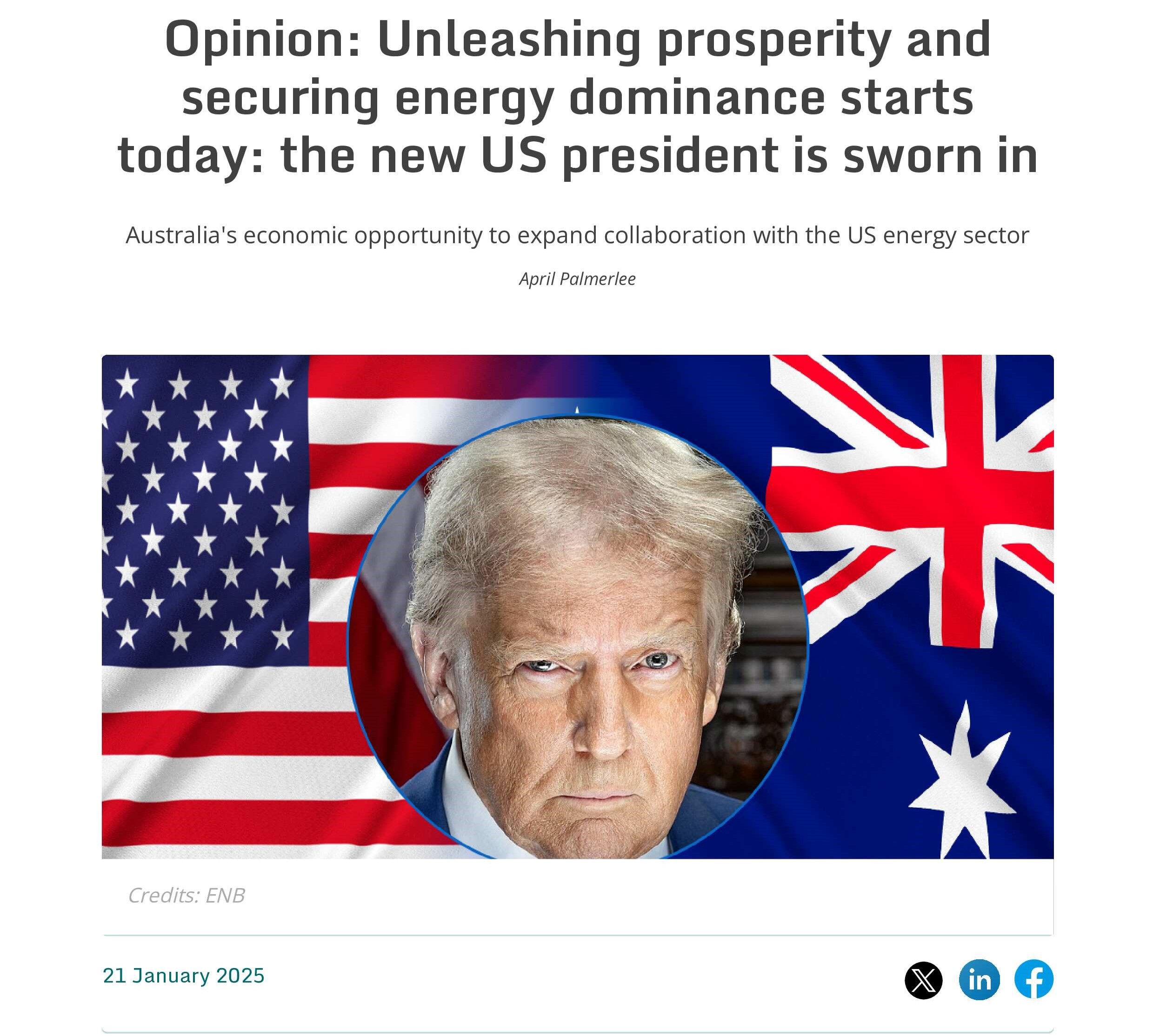
Washington DC was so cold today that President Trump's inauguration was held inside the Capitol to shelter from the extreme weather. The sub-zero temperatures are a reminder of the intense energy needs of the United States to keep 330 million people safe and warm and 33 million businesses running strong.
Unlike Australia, where ministers are elected representatives, US cabinet members are nominated by the President from all walks of life – some have prior government or military experience, but others do not. In both of President Trump's administrations, he has looked to the business community to manage key portfolios: Tesla's Elon Musk and biotech entrepreneur Vivek Ramaswamy for the Department of Government Efficiency, hedge fund manager Scott Bessent for Treasury, and billionaire banker Howard Lutnick for Commerce to name a few.
Trump's energy secretary-nominee, Chris Wright, Chairman and CEO of Liberty Energy, has a similar pedigree. A self-described "science geek, turned tech nerd, turned lifelong energy entrepreneur," Wright would, if confirmed, lead a department that administers the country's energy policy, oversees 17 national laboratories, funds scientific research and manages the country's nuclear infrastructure – including nuclear weapons. The energy secretary serves in both the Cabinet and the National Security Council.
The United States relies on a system of checks and balances to maintain a steady course. Any president's nominees must pass an often-gruelling process known as confirmation hearings, in which senators grill the nominee on their decisions and actions, opinions, and priorities before voting to confirm or reject the president's choice.
Studying fusion energy at MIT and solar at UC-Berkeley, investing in geothermal and batteries and working in oil and gas, Wright has experience across many forms of energy, and he sees this as an advantage in his mission to implement President Trump's "bold agenda as an unabashed steward for all sources" of affordable, reliable energy.
Appearing before the Senate Committee on Energy and Natural Resources last week, Wright emphasised his commitment to an "all-of-the-above" energy strategy and said, "the security of our nation begins with energy." Over the past year, AmCham has led Australian business leaders through meetings in Washington DC, New York, Texas and California. In each of these key markets, we have heard about the American energy addition, not transition.
Wright is considered likely to be confirmed, as several Republican senators voiced strong support and there were no major procedural obstacles.
Australia has long played a significant role in global energy security, particularly through its contributions to critical minerals supplies and liquefied natural gas (LNG). Australia is one of the world's largest LNG exporters, which helps stabilise the global energy market, provide diversification and reduces the risk of supply disruptions. Australia is also one of the world's largest producers of rare earth elements and lithium, essential for renewable energy technologies, batteries and EVs.
A 2023 report by AmCham and KPMG noted that Australia holds the second-largest lithium reserves globally. Combining our natural resources with talent and innovation, the report revealed Australia could generate up to US$3.7 billion in exports, US$4.1 billion in capital investment and nearly 12,500 jobs within a decade.
A trusted and reliable ally, the anchor of democracy in the Indo-Pacific and a longstanding trade and investment partner, Australia has an economic opportunity to expand collaboration with the United States in the energy sector under the new administration.
This will be President Trump's final term. The 22nd Amendment to the Constitution, ratified in response to FDR's unprecedented four terms as president, limits presidents to two terms. So Trump will be looking to leave a legacy and energy will be one of the priority areas for him.
We already know that a new feature of his second term will be the National Energy Council. Trump says this Council will "oversee the path to US energy dominance" by bringing together all departments or agencies involved in the "permitting, production, generation, distribution, regulation, [and] transportation, or ALL forms of American energy." The Council will focus on cutting red tape, enhancing private sector investments and focusing on innovation over regulation.
Depending on how well this works, it could be a model for other countries.
No doubt, President Trump will bring his signature style of disruption to Washington in his second term, and energy is certainly in his line of sight.